May 18, 2026
Should Kids Take a Full Break from Soccer During Summer — or Keep Training?
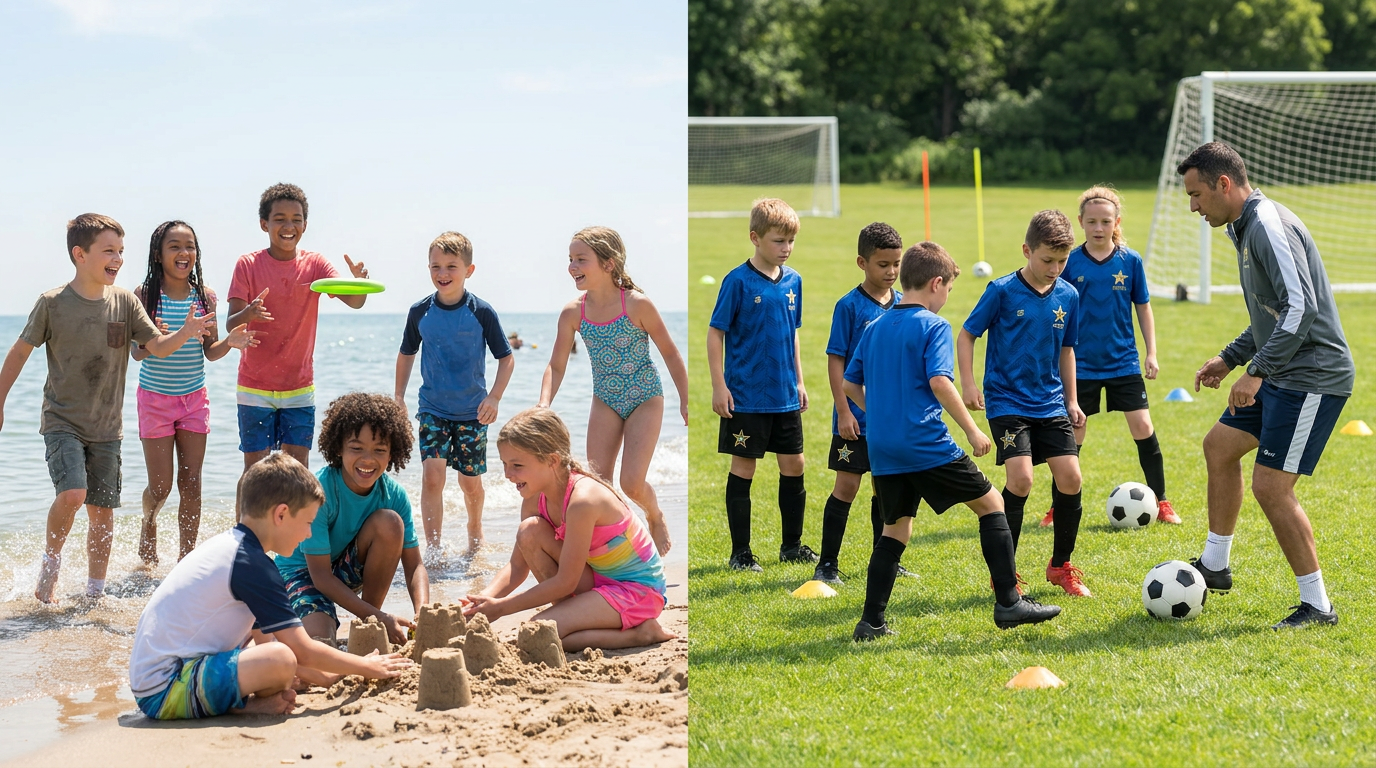
Why Complete Rest and Overtraining Both Hurt Development
Every year around late June, the same question pops up in parent group chats and sideline conversations: Should my kid stop playing soccer for the summer, or keep going? After a long season of practices, games, and weekend tournaments, everyone's running on fumes. Kids are tired. Parents are tired. But there's that nagging thought — if they stop now, will they fall behind when September hits? Here's the honest answer: a full two-month break is too long. But treating summer like mid-season is too much. What actually works is somewhere in between.
What a Full Stop Does to Young Players
Two months away from the ball takes a real toll. Fitness drops fast — cardiovascular conditioning built over an entire season can decline noticeably within just a few weeks of inactivity. Technical sharpness fades too. That first touch that felt automatic in June suddenly feels clumsy in September. Sports medicine specialists note that while short rest periods help growing bodies recover, a complete summer shutdown often sends kids back to the field out of shape and more vulnerable to early-season injuries. There's a confidence issue too. Kids who haven't touched a ball all summer often feel behind on day one. That gap — real or perceived — makes coming back harder than it needs to be. What used to feel natural now feels forced.
What Too Much Summer Training Does
The opposite extreme is just as problematic. Loading kids up with back-to-back camps, daily sessions, and tournament travel through July and August sounds productive, but the results often say otherwise. Year-round high-intensity training without adequate breaks leads to overuse injuries and mental burnout — sometimes in kids as young as 12. A family physician has noted she's now seeing 15-year-olds presenting with repetitive motion injuries that used to be reserved for adult marathon runners. Burnout goes beyond sore muscles. Kids who grind through every week of summer often arrive at fall tryouts mentally flat. They haven't had a chance to miss the game. They haven't had the space to just be kids — swim, ride bikes, hang out with friends who don't play soccer. That mental reset matters more than most parents realize. Research found that 70% of kids drop out of organized sports by age 13, and "it's not fun anymore" is the top reason cited consistently.
What Actually Works: A Balanced Summer
Coaching resources recommend that players think about their goals, listen to their bodies, and plan for a gradual return to full training rather than an abrupt jump back into intensity. The science agrees. The key is maintaining a baseline — keep the ball at their feet, keep some level of physical activity going — without replicating the demands of regular season. Summer should feel different. Lighter. More flexible. Kids should have time for family, for other interests, for unstructured play that develops creativity and problem-solving on the pitch. Some of the world's best players credit pickup games and street soccer for building instincts that structured training alone couldn't provide. Summer is the perfect window for that kind of free play — no pressure, no standings, just a ball and some friends.
How SEFA Soccer Academy Handles Summer
SEFA Soccer Academy has structured summer around this philosophy for over a decade. The academy offers both summer camps and regular training sessions, but the approach is deliberately different from the regular season. July through early August — the academy keeps regular training sessions running. Not boot camps. Not double sessions. Just enough structured work to maintain fitness, keep technical skills sharp, and give kids a reason to stay active. The intensity is dialed back on purpose. Kids still have plenty of room to go on family vacations, try other sports, spend time at the pool, or just do nothing for a few days. That breathing room is part of the plan, not a gap in it. Mid-August onward — training loads gradually increase. More intensity, more tactical work, more game-like scenarios. By the time the fall season starts, kids aren't scrambling to catch up. They're already in rhythm, physically and mentally prepared for competitive play. This phased approach avoids both problems: kids don't show up in September having lost everything they built, and they don't show up burned out from a summer that felt like another season stacked on top of the last one.
The Bottom Line
You don't have to choose between "full stop" and "full speed." The best summer plan keeps kids connected to the game at a lower gear, gives them genuine time off to recharge, and ramps up gradually before the new season. That's what keeps young players healthy, motivated, and actually excited to get back on the field when it counts.